Best Dog Food for Beagles: Wet, Dry or Mixed
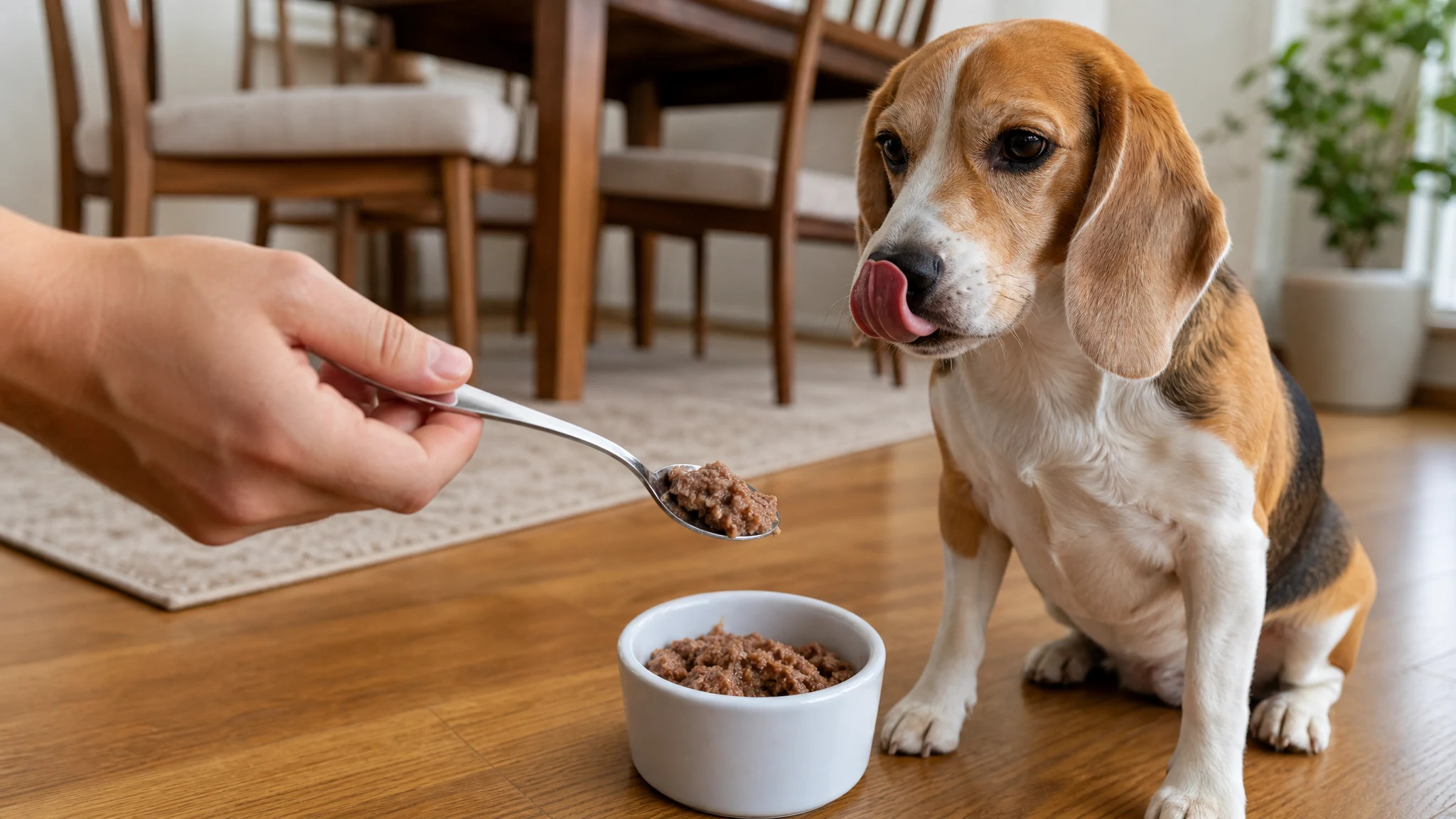
General nutrition information compiled from product labels and published sources, not veterinary advice. Your veterinarian is the right person to choose a diet for your dog, especially one with a health condition.
Beagles are a medium-sized breed, with adults typically weighing 18 to 30 pounds, according to Hill's Pet Nutrition's breed page. Several sources used by veterinary and breed-information sites, including PetMD and Royal Canin's breed library, note that Beagles are prone to obesity, and that controlled portions fed as two or three meals a day work better for the breed than free-feeding. That single fact, a small dog that gains weight easily, should drive most of the decisions in this guide, whether you choose dry kibble, wet food, or a mix of the two.
This is a how-to for reading labels and comparing products, not a taste test or a feeding trial. We did not feed, test, or rank any food ourselves. Everything below about a specific product comes from that product's own label or brand page.
What you'll need before you start
- The bag or can of your Beagle's current food, or the product page if you're buying new
- A kitchen scale or the measuring cup that comes with most dry food bags
- Your dog's current weight, ideally from a recent vet visit
- A notebook or notes app to track weight and portions over a few weeks
- Your veterinarian's contact information, for any questions about a specific dog's needs
Step-by-step: choosing between wet, dry and mixed food
-
Find the AAFCO statement on the label. Every complete dog food carries a short statement saying it is formulated to meet, or has been tested through feeding trials to meet, AAFCO's nutrient profiles for a specific life stage, such as growth or adult maintenance. For example, Royal Canin's Beagle Adult formula states it is formulated to meet AAFCO profiles for maintenance, while Hill's Science Diet Adult Perfect Weight states its food has been substantiated through AAFCO feeding tests for adult maintenance. Make sure the statement matches your dog's actual life stage: puppy, adult or senior.
-
Check whether a puppy food is formulated for large breeds, and whether that matters. A Beagle puppy will grow into an 18 to 30 pound adult, well under the 70 pound line that AAFCO and state regulations such as Kentucky's 12 KAR 3:039 use to define "large size dogs" on a pet food label. Some puppy foods, including Royal Canin's Medium Puppy dry and wet recipes, still carry the wording "including growth of large size dogs (70 lb. or more as an adult)" because they're formulated to suit multiple size ranges. That wording does not mean the food is only for large breeds, but it's worth knowing so you don't rule out a food, or pick one, based on that phrase alone.
-
Decide if your dog needs dry, wet, or a mix. Dry kibble is calorie-dense and easy to portion with a measuring cup, which helps with weight control, a known concern for the breed. Wet food has a lower calorie count per volume because of its water content, and some owners mix a small amount of wet food into kibble for interest or hydration. Either format can work for a Beagle. The deciding factors are usually your dog's weight trend, dental needs, and what keeps mealtime interesting without overfeeding.
-
Compare calories, not just cups. Dry foods vary widely in calories per cup. For instance, label and brand-page data show Royal Canin Medium Adult dry at roughly 340 kcal per cup, Hill's Science Diet Puppy Chicken & Brown Rice at about 390 kcal per cup, and Hill's Adult Perfect Weight, a weight-control recipe, at about 298 kcal per cup. A fresh food like Freshpet's Roasted Meals Grain Free Chicken recipe runs about 266 kcal per cup. Two foods that look similar on the shelf can have very different calorie counts, which matters for a breed prone to weight gain.
-
Read the first five ingredients. Ingredients are listed by weight before cooking, so the first five give a rough sense of what makes up most of the recipe. Compare a few labels side by side rather than relying on marketing claims on the front of the bag.
-
Use the bag's feeding chart as a starting point, not a fixed amount. Every brand publishes a feeding guide tied to body weight. Hill's weight-control chart, for example, adjusts the amount fed based on whether the goal is weight loss or weight maintenance. These charts are starting points. Weigh your dog's food for a couple of weeks, watch body condition, and adjust the amount up or down from there.
-
Switch foods gradually. If you're changing your Beagle's current food, mix increasing amounts of the new food in with the old one over about a week. A sudden full switch is more likely to cause loose stool than a gradual transition.
-
Recheck your dog's weight and body condition after a few weeks. If your Beagle is gaining or losing weight on the new feeding amount, adjust the portion rather than the food itself, unless your veterinarian recommends a different product.
Comparing labels: a few examples
We compared the following products using only what each brand publishes on its own label or product page: the AAFCO statement, life stage, calories, and first five ingredients. This is a label comparison, not a feeding trial or taste test, and it is not a ranking.
| Brand and product | Life stage | Calories | First five ingredients | Grain-free |
|---|---|---|---|---|
| Royal Canin Beagle Adult (dry) | Adult, purebred Beagles 12 months and older | About 284 kcal per cup | Corn, chicken by-product meal, brewers rice, wheat, corn gluten meal | No |
| Royal Canin Medium Adult (dry) | Adult maintenance | About 340 kcal per cup | Brewers rice, chicken by-product meal, oat groats, wheat, corn protein meal | No |
| Royal Canin Medium Puppy (dry) | Growth, puppy | About 410 kcal per cup | Chicken by-product meal, chicken fat, brewers rice, corn, wheat | No |
| Hill's Science Diet Adult Perfect Weight (dry) | Adult maintenance, weight control | About 298 kcal per cup | Chicken, cracked pearled barley, brown rice, pea fiber, corn protein meal | No |
| Hill's Science Diet Puppy Chicken & Brown Rice (dry) | Puppy / growth | About 390 kcal per cup | Chicken, brown rice, whole grain wheat, chicken meal, chicken fat | No |
| Freshpet Roasted Meals Grain Free Chicken (fresh) | Adult maintenance | About 266 kcal per cup | Chicken, chicken liver, eggs, pea protein, pea fiber | Yes |
Hill's publishes its protein and fat content as dry-matter averages on a separate nutrient table rather than as guaranteed minimums on an as-fed basis, so those two figures aren't directly comparable to the guaranteed analysis on a Royal Canin or Freshpet label. If you want to compare protein and fat percentages across brands, check each product's own guaranteed analysis panel rather than relying on a single number pulled from a comparison chart.
For a longer side-by-side look at how more Beagle-marketed and breed-appropriate foods stack up on label data, see our label-by-label comparison of dog foods for Beagles.
Common mistakes to avoid
- Free-feeding. PetMD's Beagle breed page specifically advises against leaving food out all day for this breed, since Beagles are prone to overeating when food is always available.
- Judging a food only by the front of the bag. Terms like "natural" or "premium" aren't defined by AAFCO. The AAFCO statement, the guaranteed analysis, and the ingredient list tell you more than marketing language.
- Assuming a puppy food needs a "large breed" label. As noted above, an adult Beagle's weight falls well under the 70 pound threshold used for large-breed puppy formulas, so that label isn't a requirement for this breed.
- Switching foods abruptly. A fast switch is a common cause of digestive upset. Transition over several days instead.
- Using the feeding chart as the final answer. Charts are starting points based on average dogs at a given weight. Your individual dog's activity level and metabolism can mean more or less food is right.
What to expect
A food that matches your Beagle's life stage, fed in an amount adjusted for that individual dog's weight and activity, is likely to support steady, healthy body condition over time, though individual results vary and your veterinarian is best placed to confirm what's right for your dog. No food, wet, dry or otherwise, can be claimed to prevent or treat a medical condition, and any dog with a diagnosed health issue, including weight-related joint stress that PetMD associates with the breed, should be managed under veterinary guidance rather than through a diet change alone.
If you're moving your Beagle onto a new food for the first time, expect the adjustment period, including the gradual switch and the first few weeks of monitoring portions, to take about three to four weeks before you have a clear read on whether the new feeding amount is right.
Sources
- Hill's Pet Nutrition, Beagle breed page
- PetMD, Beagle breed page
- Royal Canin US, Beagle breed library
- Royal Canin US, Beagle Adult product page
- Royal Canin US, Medium Adult product page
- Royal Canin US, Medium Puppy product page
- Hill's Science Diet, Adult Perfect Weight product page
- Hill's Science Diet, Puppy Original product page
- Freshpet, Roasted Meals Grain Free Chicken Recipe product page
- Kentucky 12 KAR 3:039, Nutritional adequacy