Baby Beagles: What to Know About the First Weeks
General nutrition information compiled from product labels and published sources, not veterinary advice. Your veterinarian is the right person to choose a diet for your dog, especially one with a health condition.
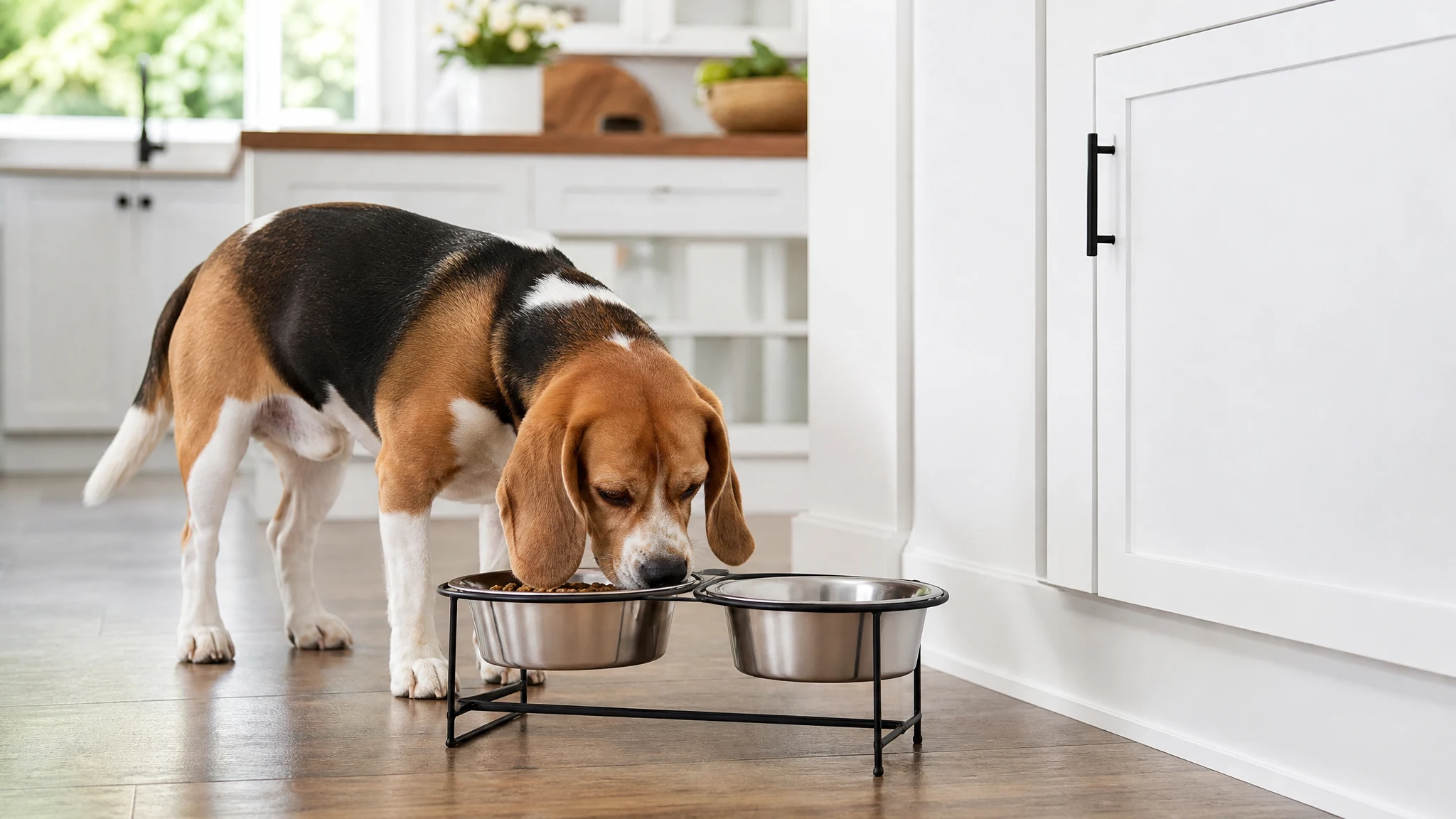
Bringing home a baby Beagle means paying attention to feeding before almost anything else. The breed is prone to becoming overweight, according to both Hill's Pet Nutrition and PetMD, and the habits formed in the first weeks tend to carry into adulthood. This guide walks through what a new Beagle puppy needs, step by step, using only label information and breed facts published by Hill's, Royal Canin, PetMD, and Freshpet.
What You Will Need
- A dog food labeled complete and balanced for growth, or for all life stages, with an AAFCO statement printed on the bag or can
- A kitchen scale or the dry measuring cup that comes with most puppy food bags
- Separate food and water bowls, placed in a quiet, low-traffic spot
- A simple written feeding log or app to track meals and weight
- A scheduled visit with a veterinarian in the first weeks at home
Step-by-Step: Feeding a Baby Beagle in the First Weeks
1. Read the AAFCO statement before anything else
Every complete puppy food carries an AAFCO adequacy statement. It tells you whether the food is formulated to meet nutrient levels for growth, or whether it has only passed a maintenance feeding trial. For example, Royal Canin's Medium Puppy Dry formula states it is "formulated to meet the nutritional levels established by the AAFCO Dog Food Nutrient Profiles for growth including growth of large size dogs (70 lb. or more as an adult)." That "including large size dogs" wording describes the diet's formulation standard. A Beagle, at roughly 18 to 30 pounds as an adult per Hill's Pet Nutrition (PetMD gives 20 to 30 pounds), does not fall anywhere near that 70-pound line, so the large-breed growth rules built into that wording are not something a Beagle puppy's body weight triggers on its own.
2. Choose a growth or all-life-stages formula, not an adult maintenance food
Puppies have different nutrient needs than grown dogs. Hill's Science Diet Puppy Chicken & Brown Rice Recipe, for instance, carries an AAFCO statement for "growing puppies and gestating or lactating adult female dogs." Note that Hill's publishes its protein and fat figures as average nutrient content on a dry matter basis rather than as the guaranteed minimums printed on most bags, so those numbers are not directly comparable to a standard guaranteed analysis panel. Whatever brand you choose, check that the statement on the bag you are actually holding says growth or all life stages, not maintenance alone.
3. Set a feeding schedule, not free access to food
PetMD advises against free-feeding Beagles and recommends controlled portions split into two or three meals a day for adults. For young puppies specifically, PetMD notes that more frequent meals, up to four a day, can help prevent low blood sugar. As your baby Beagle grows, meals are typically reduced in number while the portion per meal increases.
4. Measure portions using a label guide as a starting point
Feeding charts on pet food labels are starting points, not fixed rules. Royal Canin's own puppy feeding tables are organized by the puppy's age in months and the adult weight you expect them to reach, while its Beagle Adult formula organizes amounts by current weight and activity level. For a breed-specific breakdown of how these amounts scale by age and weight, see our feeding chart by age and weight. If your puppy has a diagnosed health condition, ask your veterinarian to confirm the right amount rather than relying on a label chart alone.
5. Watch body condition, not just the bowl
Because Beagles are prone to weight gain, PetMD and Hill's both flag obesity as a breed concern worth monitoring from puppyhood onward. Rather than going by eye, ask your veterinarian to check body condition at routine visits and adjust portions if a puppy is gaining faster or slower than expected for its frame.
6. Schedule an early veterinary visit
A veterinarian can confirm that a puppy's weight gain and development are on a reasonable track, discuss vaccination timing, and flag anything that needs closer attention. This is also the right person to ask about any food change if your puppy has, or is later diagnosed with, a health condition. No diet discussed here is a treatment or cure for any disease; a veterinarian makes that call for an individual dog.
7. Plan the eventual move to an adult formula
Royal Canin's Beagle Adult formula is labeled for purebred Beagles 12 months of age and older. That gives you a rough marker for when a transition conversation with your veterinarian becomes relevant, though individual puppies vary and the switch itself is worth discussing at a checkup rather than timing by the calendar alone.
Tips
- Compare labels side by side rather than trusting marketing claims on the front of the bag; the AAFCO statement and ingredient list are on the back or side panel.
- If you choose a fresh-food option, such as Freshpet's grain-free Roasted Meals recipe, check the AAFCO statement the same way you would for kibble; its label states it is formulated for adult maintenance, not growth, so it is not labeled as a puppy food.
- Introduce any new food gradually over several days alongside the previous one, since a sudden full switch is more likely to upset digestion.
- Keep treats to a small share of daily calories, since extra treats on top of a measured meal plan work against weight management.
Common Mistakes to Avoid
- Free-feeding. Leaving a full bowl out all day runs against PetMD's specific guidance for this breed and makes portion control difficult to track.
- Guessing instead of measuring. A kitchen scale or the bag's own cup is more reliable than eyeballing a scoop.
- Skipping the AAFCO statement. A food without a growth or all-life-stages statement may not supply what a growing puppy needs.
- Using punishment-based training during this stressful adjustment period. Reward-based methods, in line with American Veterinary Society of Animal Behavior guidance, are the humane approach for a puppy settling into a new home. Avoid shock, prong, or choke collars, alpha rolls, scruffing, or other dominance-based techniques.
- Assuming large-breed puppy rules apply. A Beagle's adult weight sits well under the 70-pound line used to define large-breed growth formulas, so that category is not the relevant one for this breed.
What You Might Expect
With a consistent feeding schedule, a growth-appropriate food, and regular veterinary check-ins, a baby Beagle may settle into a steady weight gain pattern over the first weeks and months, though individual puppies grow at different rates and a veterinarian is best placed to say whether a particular puppy's progress looks typical. No feeding approach described here is guaranteed to produce a particular outcome, and any concerns about weight, digestion, or development are best brought to a veterinarian rather than addressed through diet changes alone.