Dog Food for a Beagle Puppy: Switching From Milk to Kibble
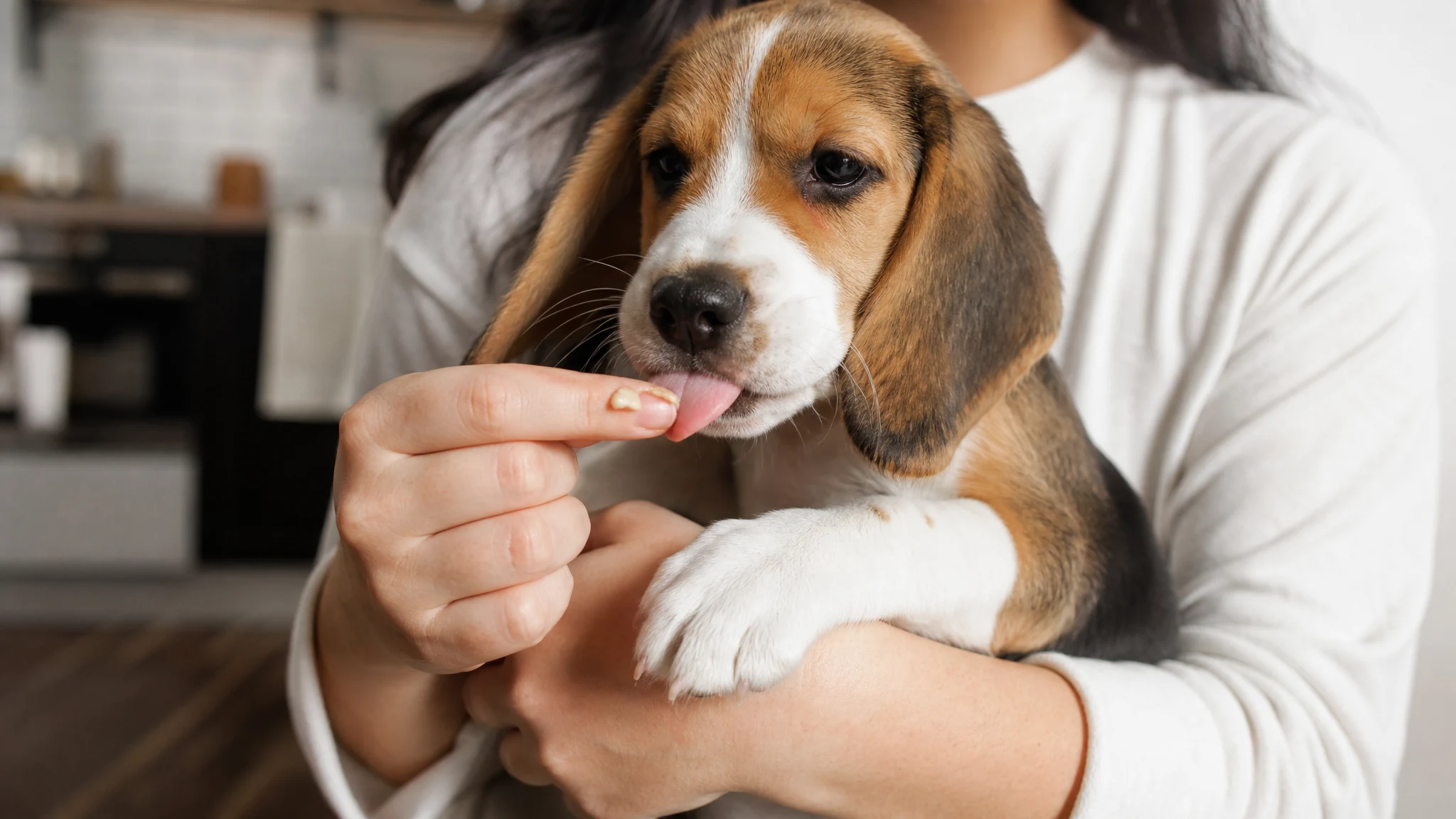
General nutrition information compiled from product labels and published sources, not veterinary advice. Your veterinarian is the right person to choose a diet for your dog, especially one with a health condition.
At some point every Beagle puppy has to move from nursing, or a bottle, onto solid food. The switch works best as a gradual process rather than a single event. This guide walks through how to introduce dog food for a Beagle puppy, how to soften and taper the transition, and how to set a feeding schedule once your puppy is eating kibble on its own.
Beagles are a small breed, with Hill's Pet Nutrition listing the adult weight at 18 to 30 pounds. That matters here because many puppy foods on the market are formulated with larger dogs in mind, and it helps to understand what the label wording actually means for a dog this size before you pick a food.
What You'll Need
- A complete and balanced puppy food labeled for growth (for example, Royal Canin Medium Puppy Dry, or Hill's Science Diet Puppy Chicken & Brown Rice Recipe)
- Warm water, or a small amount of complete wet puppy food, to soften the first servings of kibble
- A kitchen scale or a standard dry measuring cup
- Shallow, low-sided bowls your puppy can reach into comfortably
- A written feeding schedule so you can track amounts by weight and age rather than guessing
- About one to two weeks of patience, since most transitions go better slowly
Step-by-Step: Moving a Beagle Puppy From Milk to Kibble
- Confirm your puppy is actually ready. Puppies typically begin showing interest in solid food well before they are fully weaned, and a breeder or veterinarian is best placed to say when a particular litter is ready. If you adopted a puppy that is already past this early stage, your task is simpler: you are choosing and introducing its first ongoing food, not managing the weaning process itself.
- Choose a puppy food formulated for growth. Look for an AAFCO adequacy statement on the bag or can that names growth, not just adult maintenance. Royal Canin's Medium Puppy dry food, for instance, states it is formulated to meet AAFCO's nutrient profiles for growth "including growth of large size dogs (70 lb. or more as an adult)." That wording sounds like it is meant for big dogs, but it only describes the nutrient levels the recipe meets, not which dogs can eat it. Hill's Science Diet Puppy Chicken & Brown Rice Recipe is another growth-labeled option, with an AAFCO statement confirmed by feeding tests for growing puppies. Read the statement on whatever bag you are holding rather than assuming.
- Soften the first few servings. A puppy used to nursing, or to a bottle, has no experience chewing. Mix a small amount of the chosen dry food with warm water, or stir in a little complete wet puppy food, until it has a soft, mashable texture. Royal Canin's Medium Puppy Thin Slices in Gravy is one example of a wet puppy food that can be used this way, though any complete wet puppy food works for softening.
- Introduce the new food gradually over about a week. If your puppy is already on some solid food and you are changing brands or recipes, swap in the new food a little at a time: roughly a quarter of the new food mixed with three-quarters of the old for a couple of days, then half and half, then mostly new, then all new. A sudden full switch is more likely to upset a puppy's digestion than a gradual one.
- Weigh or measure every portion. Eyeballing a bowl of kibble is an easy way to overfeed a small-breed puppy. Use a kitchen scale or a measuring cup against the feeding guide on the bag as a starting point, then check it against a weight-based schedule such as the one in our Beagle feeding chart by age and weight, which breaks amounts down by your puppy's current weight rather than a single average number.
- Split the day's total into several small meals. PetMD notes that puppies generally do better with more frequent meals, up to four a day, partly to help prevent drops in blood sugar between feedings. As your Beagle puppy grows, you can gradually reduce the number of meals while keeping the daily total in line with the feeding chart.
- Watch body condition, not just the bowl. Hill's Pet Nutrition notes that Beagles can start putting on weight easily once they are past the puppy stage, and PetMD lists obesity as very common in the breed, recommending controlled, measured meals rather than free-feeding. Starting that habit in puppyhood, by feeding set amounts at set times instead of leaving food out all day, carries forward into adulthood.
- Reassess every couple of weeks as your puppy grows. A growing Beagle puppy's calorie needs change quickly. Recheck the feeding chart against your puppy's current weight rather than sticking with the amount you started on.
Tips for a Smoother Transition
- Change one thing at a time. If you are weaning and also trying several brands, your puppy's stomach has more to adjust to at once.
- Keep fresh water available at all times once your puppy is eating solid food, since kibble has far less moisture than milk.
- If you plan to use a wet food to soften kibble long-term rather than just during the transition, check that it is labeled complete and balanced for growth on its own, the way Royal Canin's Medium Puppy Thin Slices in Gravy is, rather than assuming any wet food will do.
- Keep the switch boring. The same brand, same bowl placement, and same mealtimes each day make it easier to tell if something else, rather than the new food, is causing an upset stomach.
Common Mistakes to Avoid
- Switching foods cold turkey. A same-day swap from one recipe to another is more likely to cause loose stool than a gradual changeover.
- Free-feeding a bowl that's always full. Given the breed's documented tendency toward weight gain, per Hill's Pet Nutrition and PetMD, measured meals are a better habit to build from the start than leaving a full bowl out around the clock.
- Adding cow's milk to soften food. Plain water or a complete wet puppy food is a better choice for softening kibble; cow's milk is not a substitute for the milk a nursing puppy would get from its dam.
- Misreading "large size dogs" wording on a label as a sign the food isn't for a Beagle. That phrase, which comes from AAFCO wording adopted into state pet food rules such as Kentucky's 12 KAR 3:039, describes which nutrient profile a growth food meets. It does not mean the food is restricted to large breeds, and it does not mean a Beagle needs those extra nutrient levels either. What matters is that the label states the food is complete and balanced for growth.
- Guessing at portions instead of using a chart. A tablespoon too much, repeated daily, adds up over weeks for a dog this size.
What to Expect
Most puppies can be expected to accept a new kibble texture within one to two weeks of a gradual introduction, though every puppy adjusts at its own pace and some may take longer. A short period of softer stool during the changeover is common and often settles once the switch is complete; it is not a guaranteed outcome, and it is not something this article can promise will happen for your puppy. No specific food can be claimed to prevent or treat a health condition, including the weight gain, hypothyroidism, or joint issues that PetMD and Hill's Pet Nutrition mention as more common in the breed. A veterinarian is the right person to evaluate an individual puppy's diet, especially one with an existing health condition, and to confirm feeding amounts for that puppy rather than relying on general guidance.
When to Call Your Veterinarian
- Your puppy refuses solid food for more than a day or two
- Diarrhea or vomiting continues past a couple of days, rather than settling as the transition finishes
- Your puppy seems unusually weak, wobbly, or lethargic, which PetMD associates with low blood sugar risk in young puppies fed too infrequently
- Your puppy has a diagnosed health condition, in which case feeding amounts and food choice should be confirmed with your veterinarian rather than taken from a general chart